33 stories
·
1 follower

Let It Go: Finishing games is optional

1 Share

Most games, but especially modern games, are made to be finished. I am expected to play from beginning to middle to end, and if I find myself struggling at some point along the way it’s generally safe to assume a myriad of helpful progress-smoothing settings are waiting to help me to readjust the experience to my liking. This is a good thing. I should be able to get as far in a game as I want to.

Want to. Am I carrying on because I want to, or because I feel like I should—because I can? Do I actually want to see what’s next, or am I just trying to get the whole thing over and done with so I can say I cleared it? Am I clawing my way through this stage because I like a challenge, or do I think I’m just too close to the end to quit?

Am I having fun?

That’s the only question that matters, really. This is entertainment. I’m supposed to be enjoying myself. And if I’m not? I’m allowed to stop. Yep, straight away. Drop it faster than a radioactive potato full of hornets. I’m not obliged to give a game a fair shake if I’m playing for my own sake, or to listen to anyone who says “No honestly, it really picks up once you reach the plot twist in chapter 10”. 

Although there are plenty of “good” reasons for dropping a game—poor pacing, irritating checkpoints, some mandatory boss battle built out of broken hitboxes and spite—I’m also allowed to put a game down for no reason beyond simply having had my fill of it. I’ve spent some time with it, and that time was fun. That is enough. In much the same way that one slice of cake is a pleasant treat and two is an invitation to lie on the sofa with a belly full of regret, moving on when I’m at my limit can be a positive, mindful act. Maybe I’ll go back later—easier than ever thanks to generous storage on modern devices and the general adoption of cloud saves—when I’m in the mood for more of this metaphorical cake, maybe I’ll leave it unfinished forever, my head filled with nothing but fond memories.

But the ending. 

What about it? I grew up playing European computer games that used to pride themselves on taking months to clear. Months. At best. On purpose. This extended and often insurmountable slog was seen as a good, desirable trait for a game to have, length and difficulty prized above all else. Some games didn’t have an ending at all, or contained literally hundreds of stages, which pretty much amounts to the same thing. Some were of a far more reasonable length and then ended with a simple text message or an angry rant aimed at the very people who had bought and cleared the game. Was this disinterested and/or belligerent attitude towards players superior to the less demanding design philosophies that came after? Oh goodness, no. But I am grateful for the lesson they unintentionally taught me: Playing a game purely for the sake of playing it has to be enough. Finishing it is some separate and unrelated thing, a nice but unnecessary—and unexpected—bonus. 

Even without that “training” under my belt, why would I make the effort to reach an ending I don’t really want to see? What’s to be gained from spending even more time with something I already stopped enjoying, just to see a conclusion I’m not that interested in? Who is benefiting from this unwanted toil? “I stopped enjoying this a week ago but I soldiered on anyway” isn’t something I can brag about. Gritting my teeth through unpleasant gaming experiences doesn’t confer any benefits in the way pushing through exhaustion in a long run would. Nobody else cares whether or not I roll the credits on some lengthy RPG, tough action game, or popular metroidvania I didn’t really like. 

Having to see the ending for the sake of playing “in the right way” or chasing some muddled notion of getting “value for money” turns games into a chore at best, a task to be cleared before I can move on to something I’m looking forward to, and at worst into content to be consumed. In these sorry examples it doesn’t matter how I feel, so long as I’ve obediently devoured exactly as much product as my personal guilt or the hobby at large deems to be the correct amount.

I don’t want to view games that way. I don’t want to look back and wonder how many hours I wasted conforming to nobody in particular’s idea of experiencing games “properly” when I could have been doing something I enjoyed instead. I don’t want to have a backlog of games—a series of orders to work through and clear—I want to own a library of them, something to dip into and enjoy it as I see fit. Some days that’ll take the form of repeat clears of an old favourite. Others will be the beginning of an enthralling epic I’ll willingly lose a month to. And every now and then I’ll play one for half an hour (or less), thank the game for a fun experience, and move on.

I’m going to take this train of thought even further: it’s OK to not start games, too. I’m under no obligation to play a game that doesn’t look appealing, even when I’d like to give its spinoff or sequel a go. Entire multi-game arcs can be thrown in the bin, because I can pick a series up at any point it catches my eye. I am not an idiot; I’m sure I can catch up on the most salient plot points or previously established mechanics as I go, and use contextual clues and plain old reading to infer the rest. I can practice combos, memorise spell names, and wade through skill trees if I need to. The story will not collapse if a character alludes to something that happened 20hrs ago in a completely different game, and if it does then that was never my narrative fumble to fix.

I must remember to play with purpose, and with my own best interests in mind. If I stop trying to finish (or start) games because I “should”, I’ll only end up playing—and enjoying—even more of them.

Buy Me a Coffee at ko-fi.com


Read the whole story
coffeentacos
1 day ago
reply
Vancouver
Share this story
Delete

Here’s what it’s like to run the Ridge Racer course for 20 hours

1 Share
Here’s what it’s like to run the Ridge Racer course for 20 hours

(My Switch says it's been 10+ hours, but I feel like it's been 40+. This could just be the time dilation of practice.)

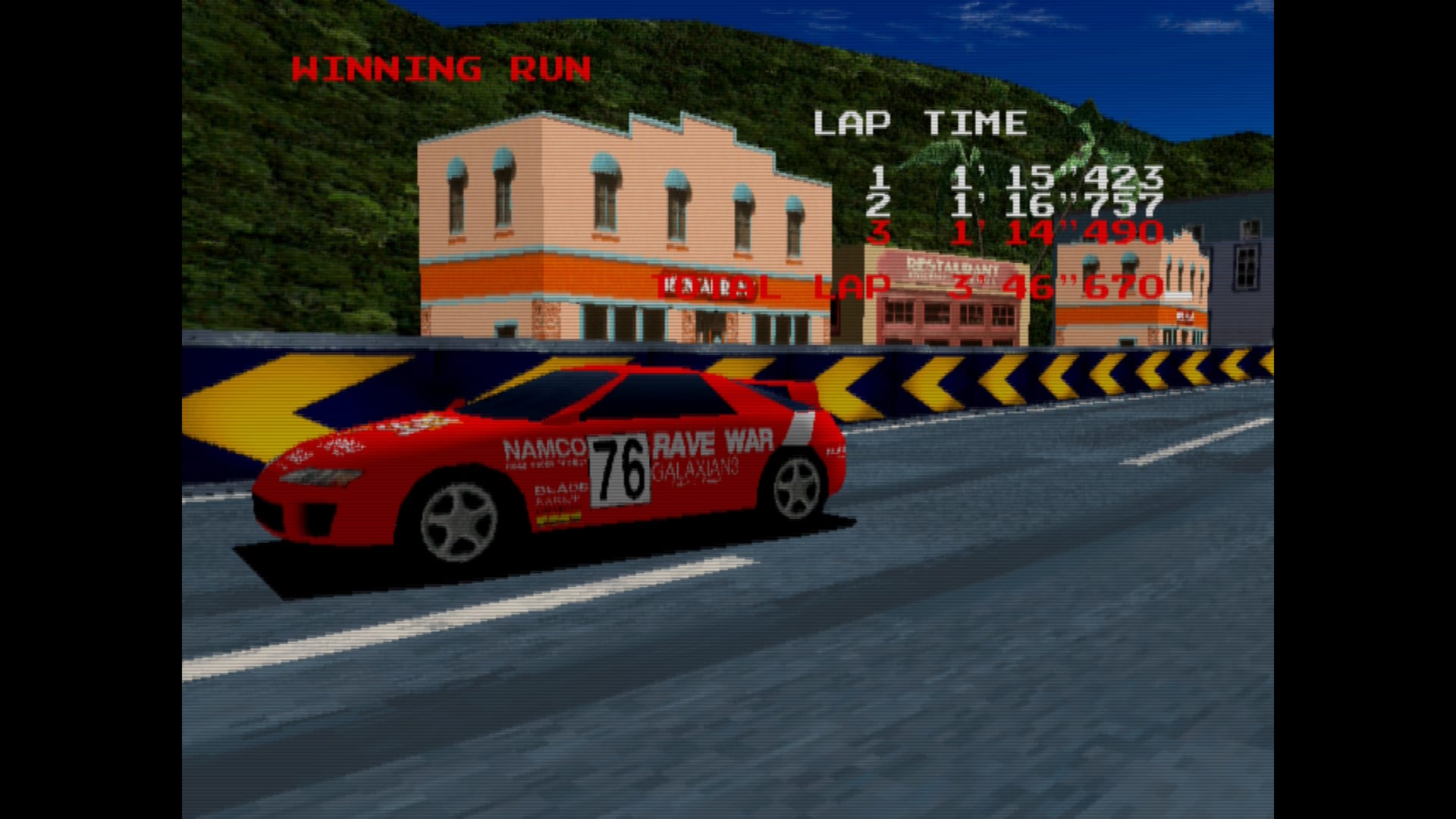
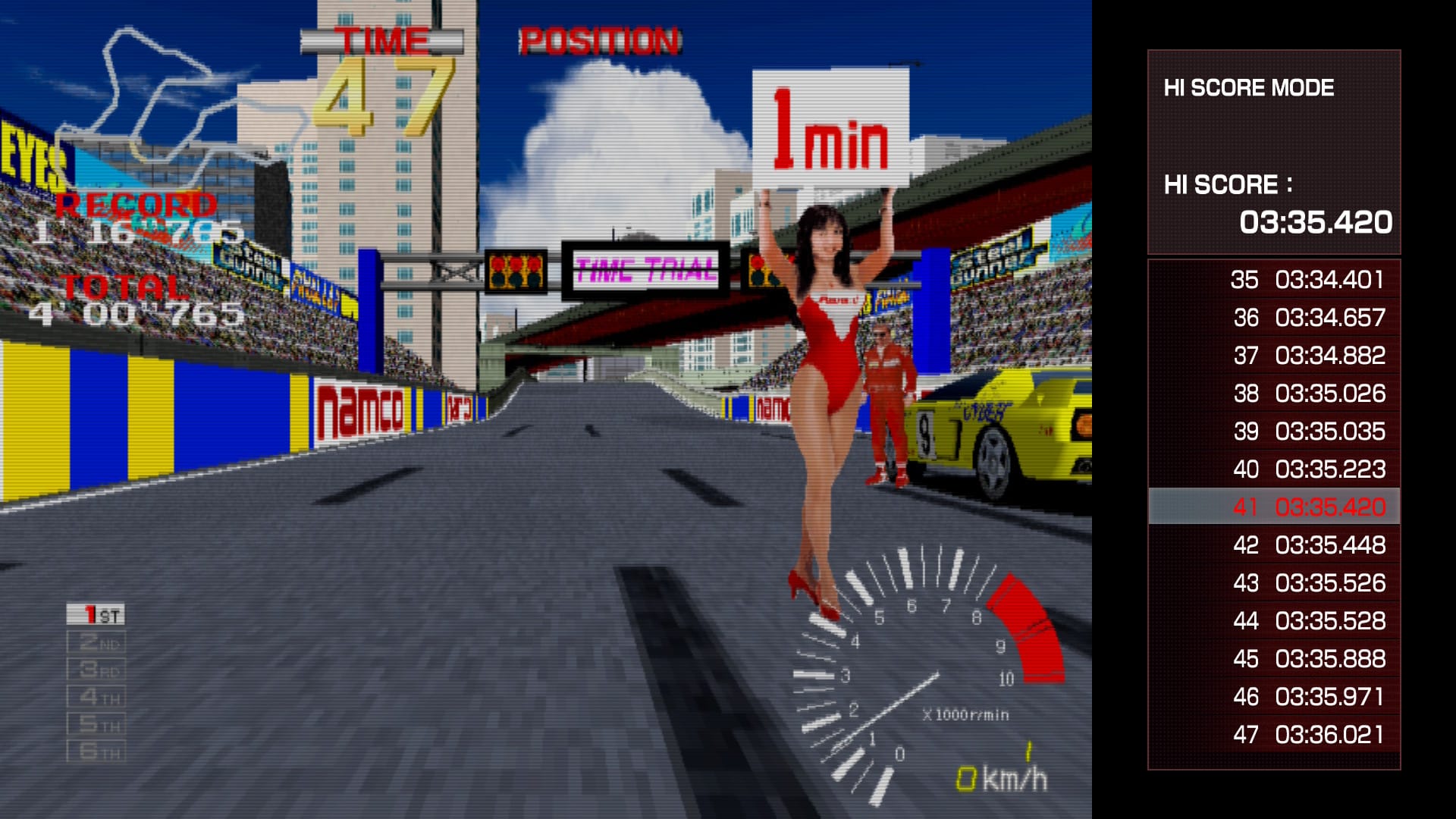
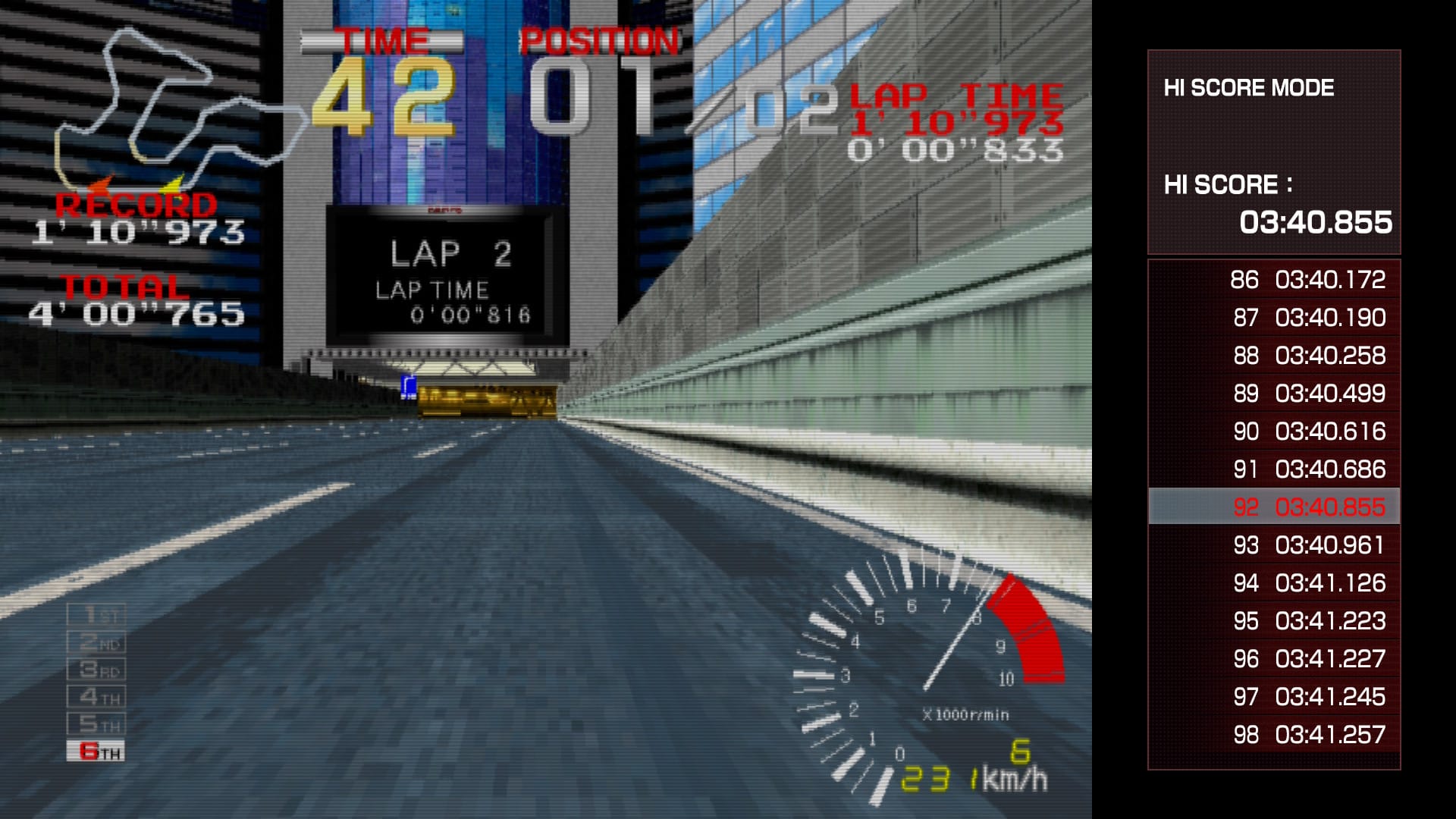
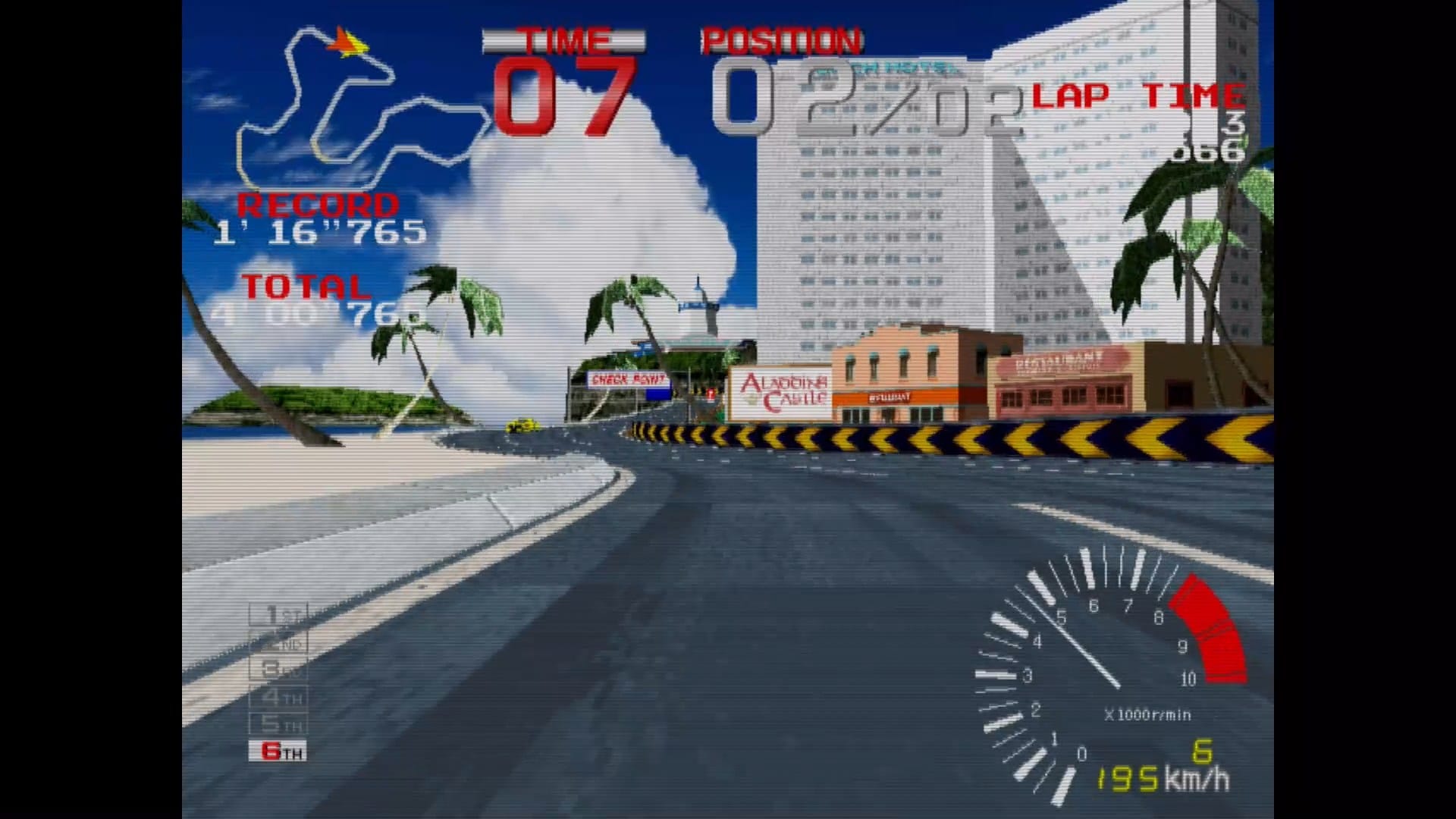
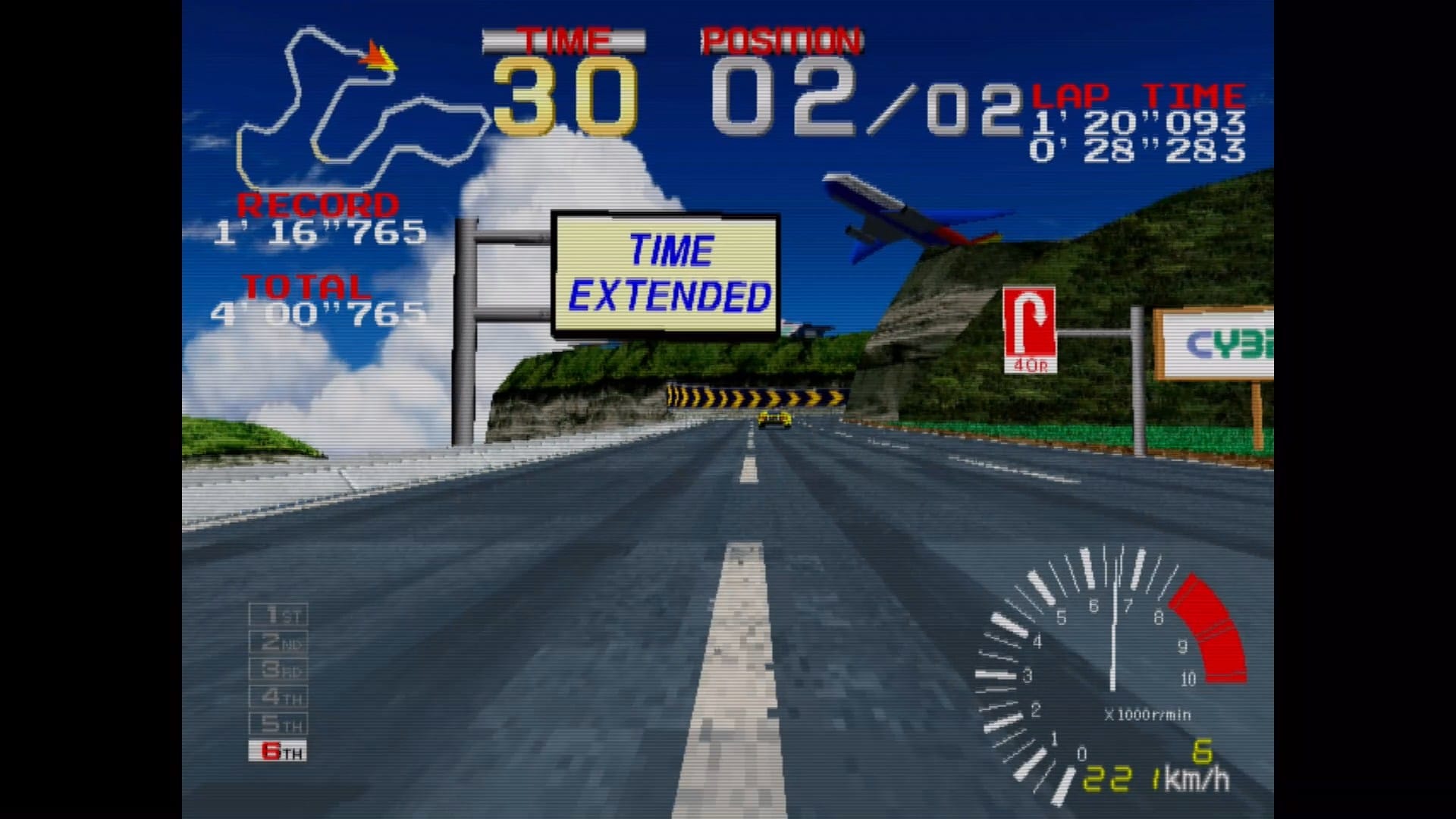
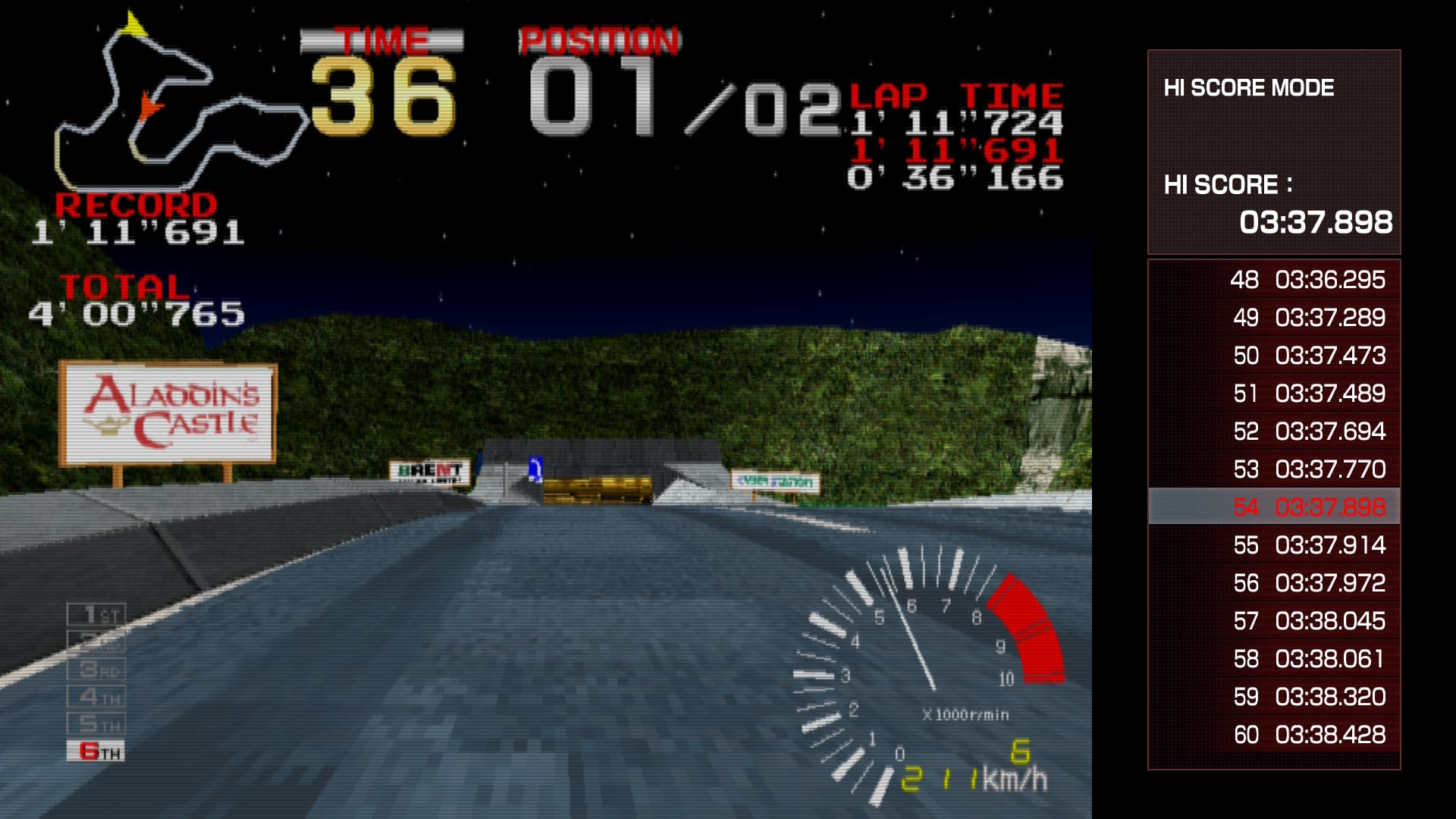
Like I've said, I’ve been really stuck on this year’s release of Ridge Racer in the Arcade Archives series. It’s probably my most-played Switch 2 game at this point, and as of this writing I am among the top 50 players on the time trial leader board. One car, one track. I’ve been perfecting it for months. When a game sticks on me, it really sticks.

Why Ridge Racer? (aren’t you a Sega man?)

I actually do have a lot of hours in Virtua Racing on Switch and even the old Daytona USA port on 360/PS3, I just never got as far up the leaderboard as I did in this game. My old Joycons started drifting too, making my upgrade to a Switch 2 a perfect time to get back to classic arcade racing.

Why not the PS1 version? That’s the same, right?

Here’s what it’s like to run the Ridge Racer course for 20 hours
This was of course quite impressive for the time, but you can see it's actually a massive downgrade from the System 22 version.

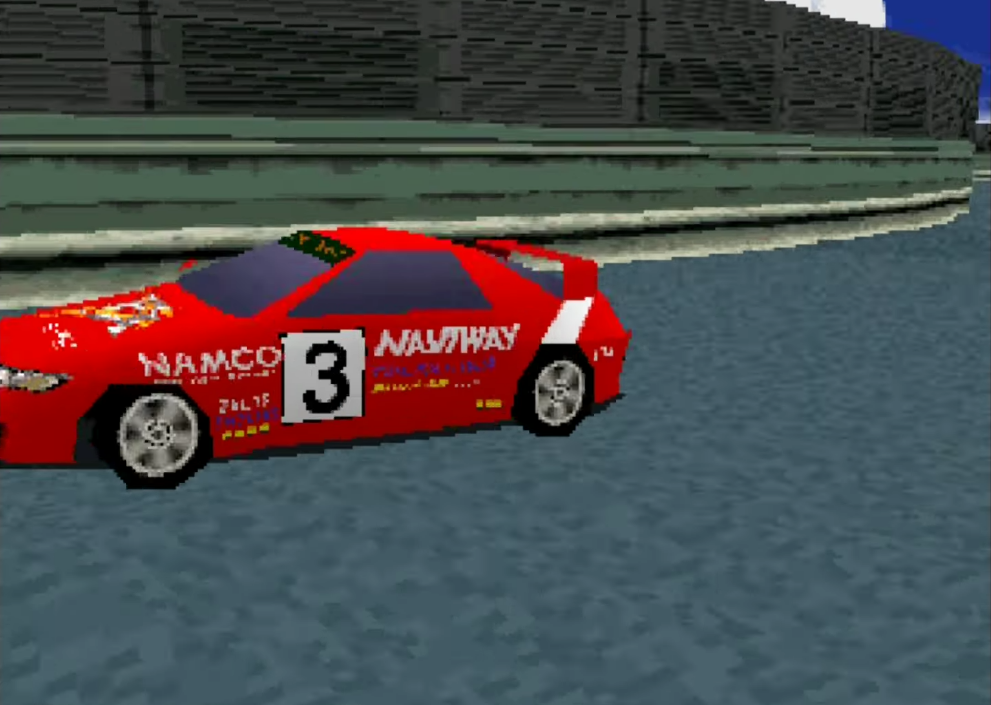
It’s actually not! At the time the PR line was that PS1 games were exactly like having the arcade at home, but that’s just not true of what was arguably the flagship title of the PS1 launch. The arcade version was on the System 22 arcade board (it was the later System 11 that was PS1-based) and the PS1 version doesn’t look nearly as good. It also adds faster playable cars, so time attacking it is completely different. PS1 Ridge Racer has been re-released over and over again, but the Arcade Archives port is the first time the original arcade release has been ported to consoles.

(There is always emulation, but something seems very off to me about the MAME Ridge Racer videos I’ve watched.)

Anyway, that first arcade release of Ridge Racer has the kind of arcade purity I’m looking for. Like I said, one car, one track. Learn to drive the course, execute, repeat. Time Trial, the game’s final challenge, makes things even more straightforward by eliminating all rival cars but one. Even when you know exactly what you have to do, it’s a feat of skill and concentration to knock out those perfect three laps in a row.

The Gamesoft Robo Fun Club is a solo labor of love that depends entirely on paid subscriptions from readers to exist. If you enjoyed this piece and you'd like to see more, I'd love to see you become a regular or paid subscriber. Paid subscribers get exclusive posts and keep me fed. Thanks for reading the pitch and hope to see you subscribe!

The rules

Here’s what it’s like to run the Ridge Racer course for 20 hours

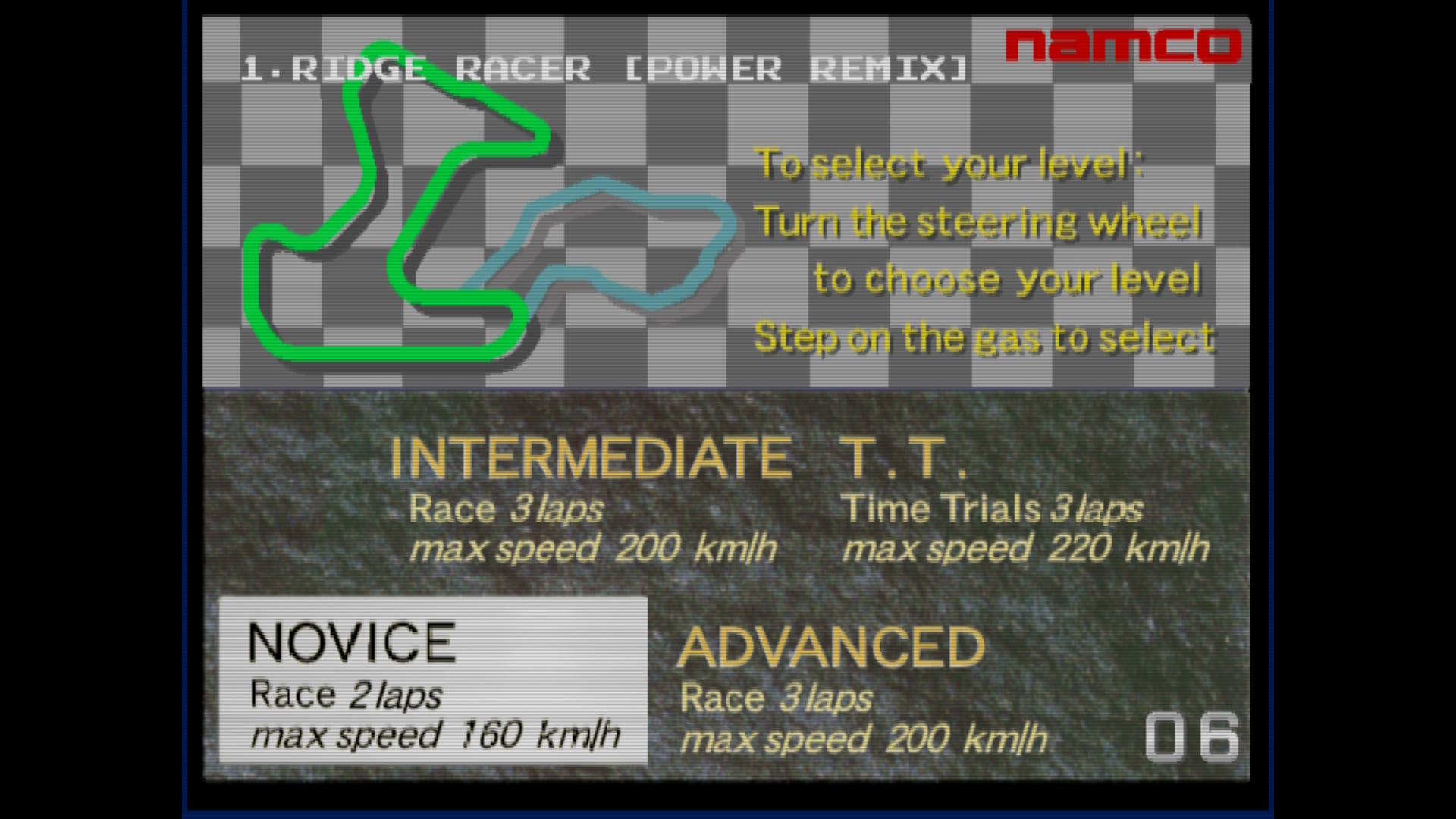
I practice the Time Trial course, effectively the game’s highest difficulty. Ridge Racer has four difficulty modes, each of which raises your car’s maximum speed and one of which exposes a new and more difficult section of the course. Time Trial and Advanced are the same course, but Time Trial clears the road of all but one rival and makes your car faster, which in turn makes key parts of the course more difficult.

In short, hug the inside of the track, give yourself room to turn into corners, and take advantage of the game's generous drifting mechanic to take curves fast and smooth without drifting too hard and losing speed unnecessarily. But if you didn't catch that, a turn-by-turn guide follows.

I make no promises that the way I run this course is the absolute fastest and best plan, cause it's not. But I am also top 50 on the leaderboards, so I think I’m probably on to something.

The course

Here’s what it’s like to run the Ridge Racer course for 20 hours
She and the pit team tech are flat sprites, so if the camera did move from this exact point before they left the screen, you'd have the illusion broken

As the announcer counts down and the race queen struts by, you might be looking for your view change button to pull the camera out of the driver’s seat and behind your car. Well, there is none: in this first version of Ridge Racer you drive from a car’s eye view or nothing. If you’re not used to driving this way in games, it’ll take some time to imagine the space around you and learn exactly how much space there is between your camera and the wall. Sometimes you’ll be wrong. Sometimes I cut a turn too close and hit a wall I didn’t think was there.

Unlike most other arcade racing games, this game wants you to hit the accelerator the moment the race announcer says “GO!”, and no sooner. Hit it early and your engine will stall while your rival speeds off, and the announcer will have a laugh at you about it. Get it right and he’ll say that’s “just what I wanted to see~!” As a rule, if the announcer praises you after a turn, that means you nailed it. “You must be one genius of a driver, you’ve gotta teach me~!”

Here’s what it’s like to run the Ridge Racer course for 20 hours
I learned from a Youtube video that the babbling vocals on Rotterdam Nation are in fact the announcer quips played backwards and pitched up.

Once you’re off you hit a wide city straightaway: note the huge screen that replays your run from a TV-camera distance and displays your lap time. It’s the kind of detail that blew minds back in the early 90s, a touch that indicates this game is the actual future.

Anyway, the first and most obvious racing principle is to stick to the inside of the track, which is naturally the shortest distance. When you’re going for a time trial record, that means sticking as close as you can to the inside wall without actually hitting it. I like to imagine it with a scene from Initial D, where Takumi hugs the edge of the road so tight that one of his car's tires is actually spinning in the gutter between the road and the mountain’s edge. (You can actually do this in the ID racing games.) I try to think of that tire in my head, “locking” it up against the wall without touching.

Here’s what it’s like to run the Ridge Racer course for 20 hours
Of course it isn't really lighting, but the magic trick of differently colored textures implying light

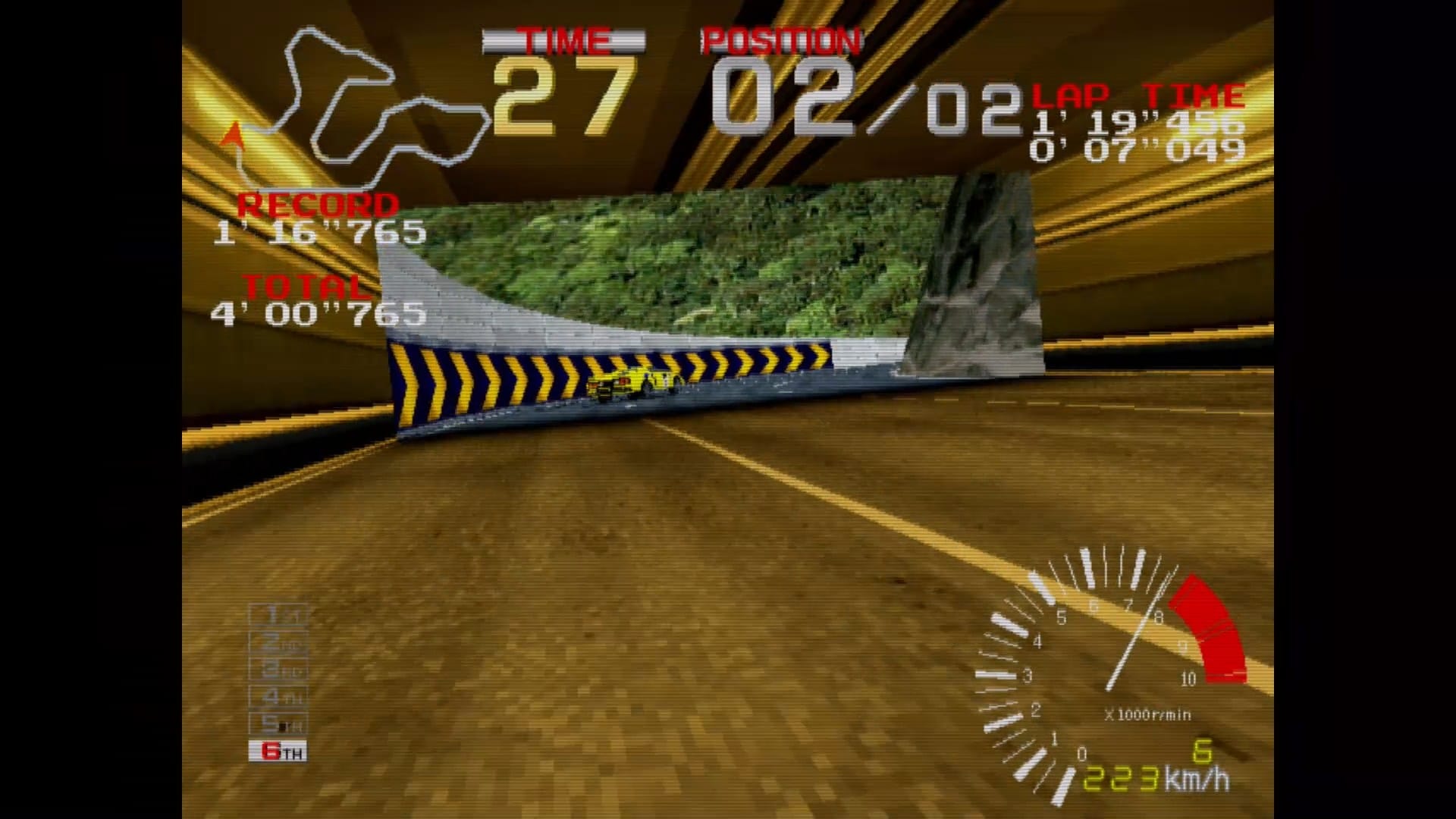
In a few seconds you’ll enter the yellow-lit tunnel, another technical “wow” moment in a game that is half tech demo. Ridge Racer does not waste time with its course design, and gets the player right down to sights they could never see in 16-bit 2D. As you continue to hug the wall here, you’ll make an easy turn right into a blocked-off section and plow through the warning signs that were meant to keep you off it. At the end of the tunnel you’ll want to shift left to get ready for the upcoming corner.

One of the ways Ridge Racer manages difficulty is to limit the player’s maximum speed. Novice mode is a gentle Sunday drive, and there you would stroll effortlessly through this turn at full throttle. But at the speed you’re driving in Time Trial, it’s going to require a little finesse.

The basics of cornering, to be brief: start on the outside to give yourself room to turn, then slow down and turn wide into the inside of the curve until you’ve reached its apex, the exact middle point, and then punch the accelerator to leave the turn running.

Here’s what it’s like to run the Ridge Racer course for 20 hours

In a realistic game we might slow down before we take the turn, but in Ridge Racer it goes like this. On this turn we’re going to let go of the gas for a moment and turn simultaneously. Once we’ve slowed down enough— that’s something you’re going to have to feel out yourself— punch the gas and go. We’re looking for a smooth, controlled turn with a minimum of speed lost. If the tires squeal, you’ve overdone it. We need to drop just enough speed that we can run through the next turn without decelerating.

Most of this course should be run at close to top speed; you really don’t need to slow down much. I play automatic transmission in this game, because manual doesn’t have a higher top speed and there is rarely a need to go under top gear anyway.

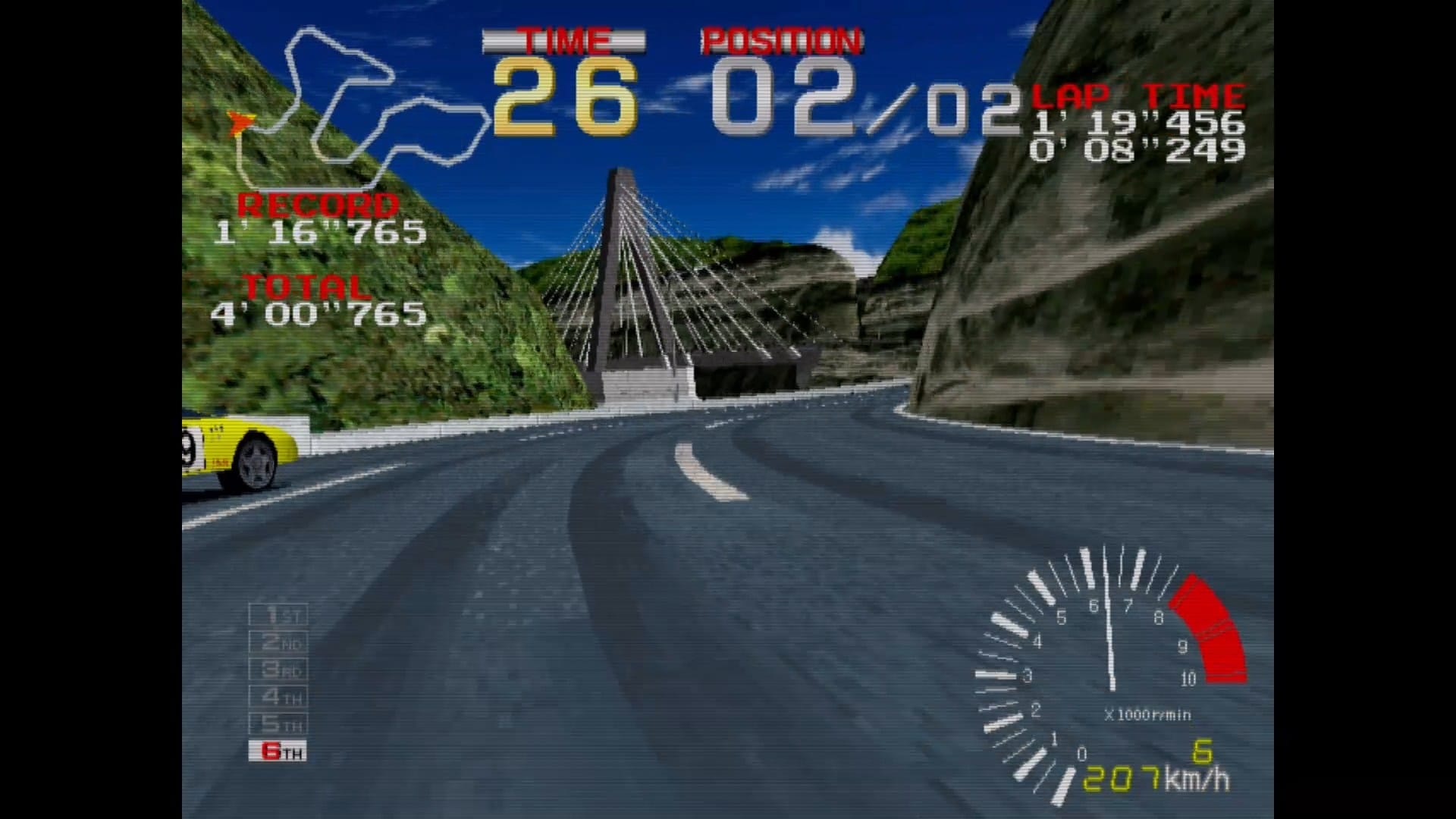
Exiting this turn you’re going to want to push to the right lane to set up for the long left turn over the bridge, coming up immediately. Position yourself correctly and you shouldn’t need to slow down at all during this turn: get it a little bit wrong and you have a run-ending collision with the wall coming. If I feel myself getting too close, I let go of the gas for a micro-second.

Here’s what it’s like to run the Ridge Racer course for 20 hours
The moment just before the turn

Again, hug the right wall briefly as you drive uphill. When you hit the peak of the hill and a sign becomes visible, move left to the middle of the road. Turn hard to the right and you should get through this curve cleanly. You don’t have clean visibility here, so you just have to trust your placement and timing.

The next turn looks like you're supposed to drift really wide and hit the outside of the road, but that's too slow. Get in the left/middle of the road and turn hard, only momentarily letting up on the gas. You should be able to get through this one fast.

Here’s what it’s like to run the Ridge Racer course for 20 hours
from my ill-advised experiment in just slowly driving through the course and taking screens: i ran out of time before I could get a lap in

This leads immediately into an S-curve. The fastest way through an S-curve is a straight line, so position yourself to pass straight through the middle. If you’re actually turning all the way through these curves rather than shifting gently, you’re doing it wrong and losing time.

Here’s what it’s like to run the Ridge Racer course for 20 hours
"Wwwatch yourself!"

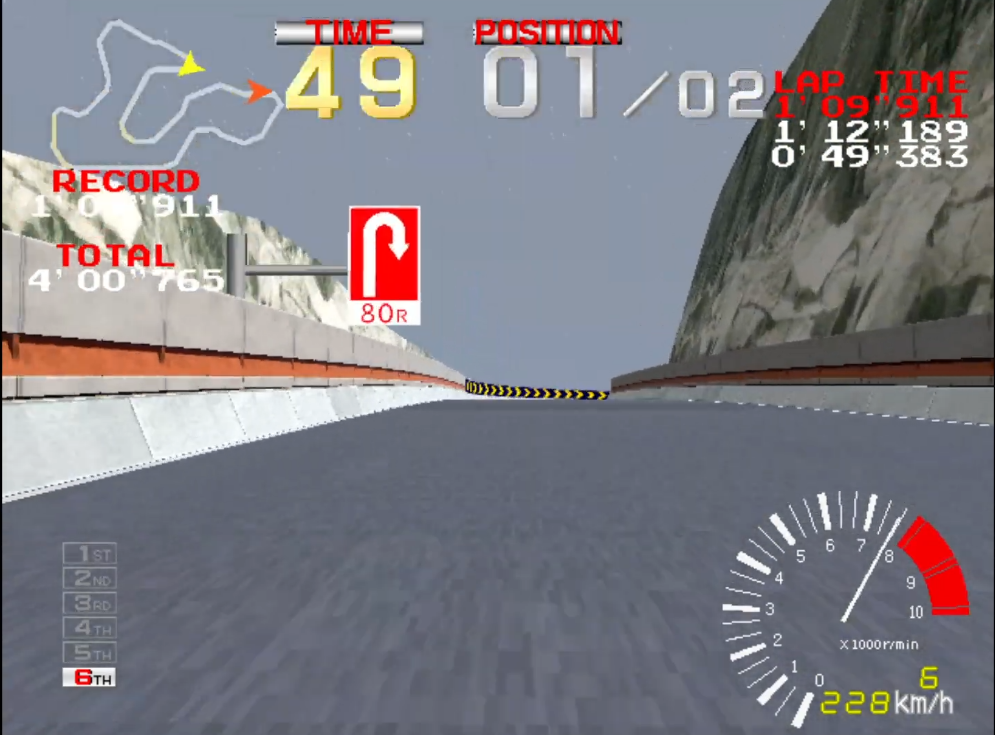
Exit towards the left to take on the first truly tough corner on the course: the only one the announcer will actually warn you about, because if you don't slow down here you will crash.

This turn calls for a slightly longer drift than the one you took on the first turn. A little bit after the sign, let go of the gas and start turning in. When you’re close to the center of the curve (and yes, the mountain wall), punch the accelerator and you’ll drift nicely out of the turn. You can either drift this too hard, drop a lot of speed, and hear your wheels spin out, or you can pass through smoothly with a just-right drift. To give you an idea, I go from top speed to about 210 km/h when I take this turn perfectly. It’ll take a lot of practice and a firm idea of exactly how long to stay off the pedal to get consistent with this turn.

Here’s what it’s like to run the Ridge Racer course for 20 hours

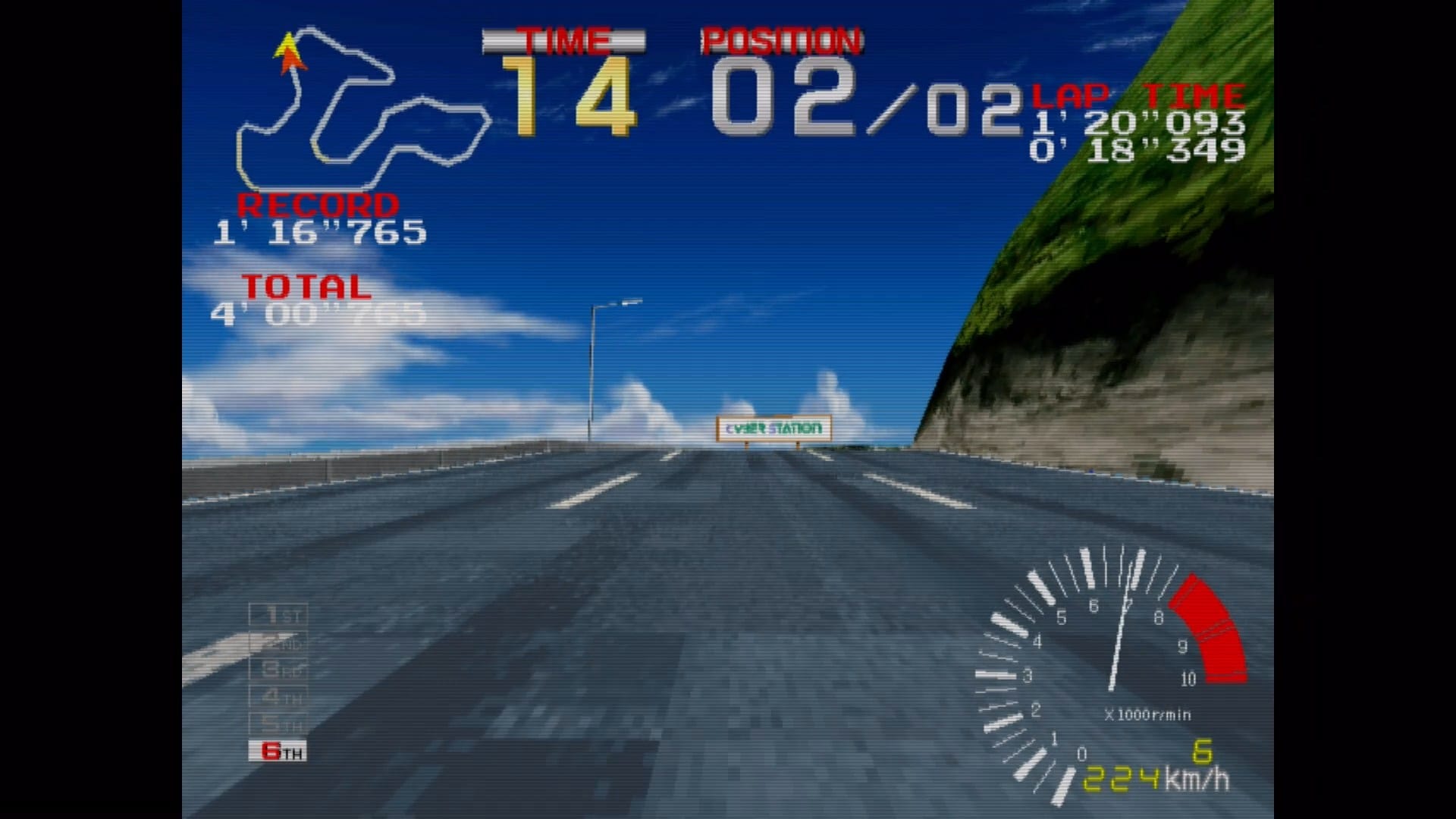
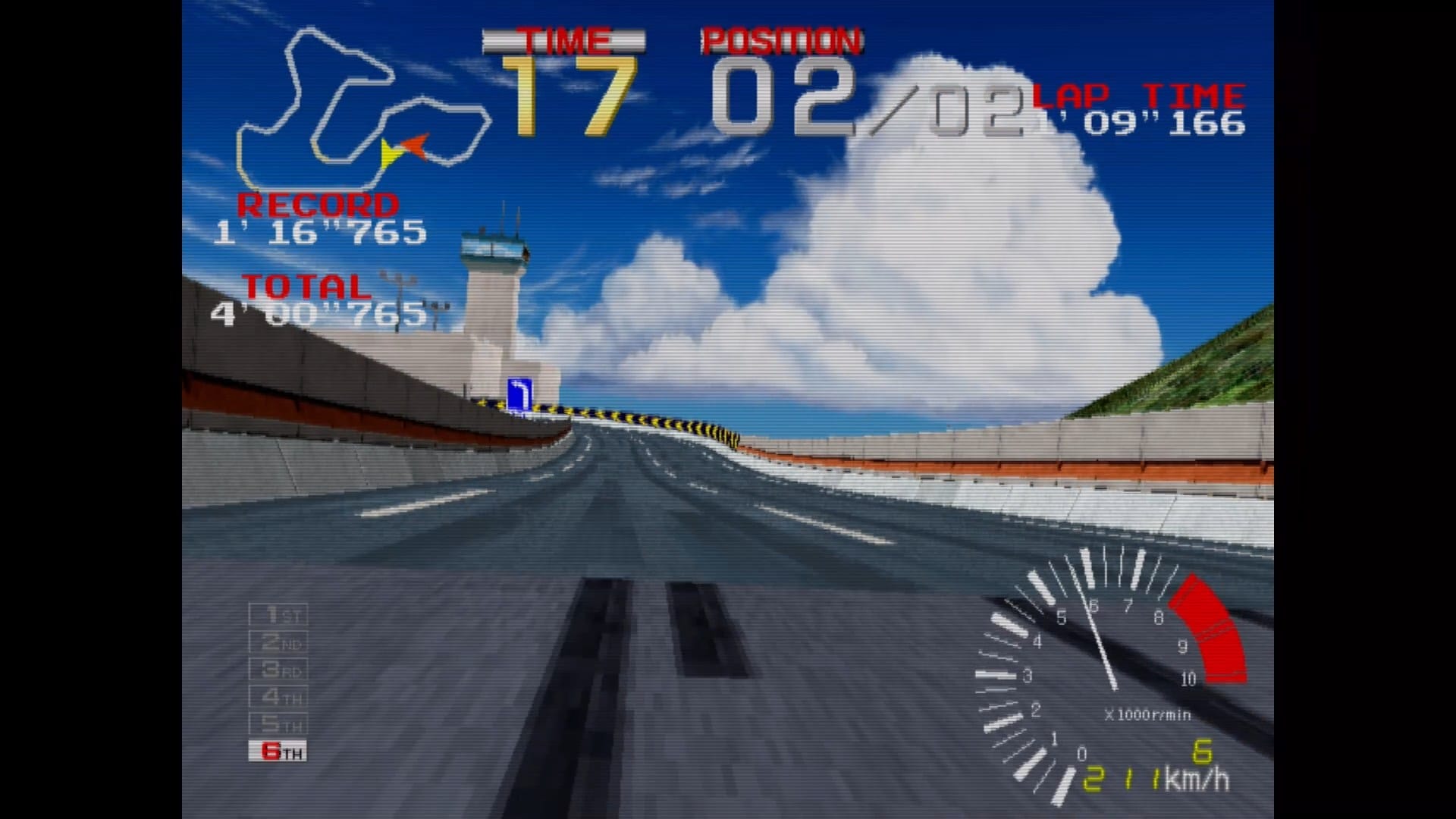
On the next straightaway, you have a speed bump to contend with. Don’t hug the inside (left) wall here or you’ll be in trouble when you land. Give yourself a little distance from the wall and take the jump, keeping the car straight for the duration. You don’t want to hit the ground skidding.

Once you land, there’s a long, high-speed left turn through a tunnel that leads into the next section of the course. The Novice and Intermediate courses have this section cut off and simply loop after the tunnel, but Advanced and TT unlock a tough (and noticeably, completely generic with no decorations or scenery) section that really tests your driving technique. By the same inside-track principle, you want to cut as tight a path as possible through the long left: remember, the shortest path is best.

Here’s what it’s like to run the Ridge Racer course for 20 hours
this shot doesn't look like the others because i took it off someone else's mame run; I am sorry it's just extremely hard to cap on a switch during an extremely difficult technical segment

Once you have entered the advanced section of the track you’re going to make a quick left— keep to the left lane as well— before a deceptive 90-degree right turn. You’re going to zip through this one with a mini-drift. Turn and let go of the gas for only the briefest moment before hitting the gas again, putting you through the sharp turn with barely any speed lost. Two turns afterwards can be taken at full speed easily.

Here’s what it’s like to run the Ridge Racer course for 20 hours
This one too actually. I think that on the MAME version there is too wide a field of view because I see, for example, the "sky" texture cut off on the sides

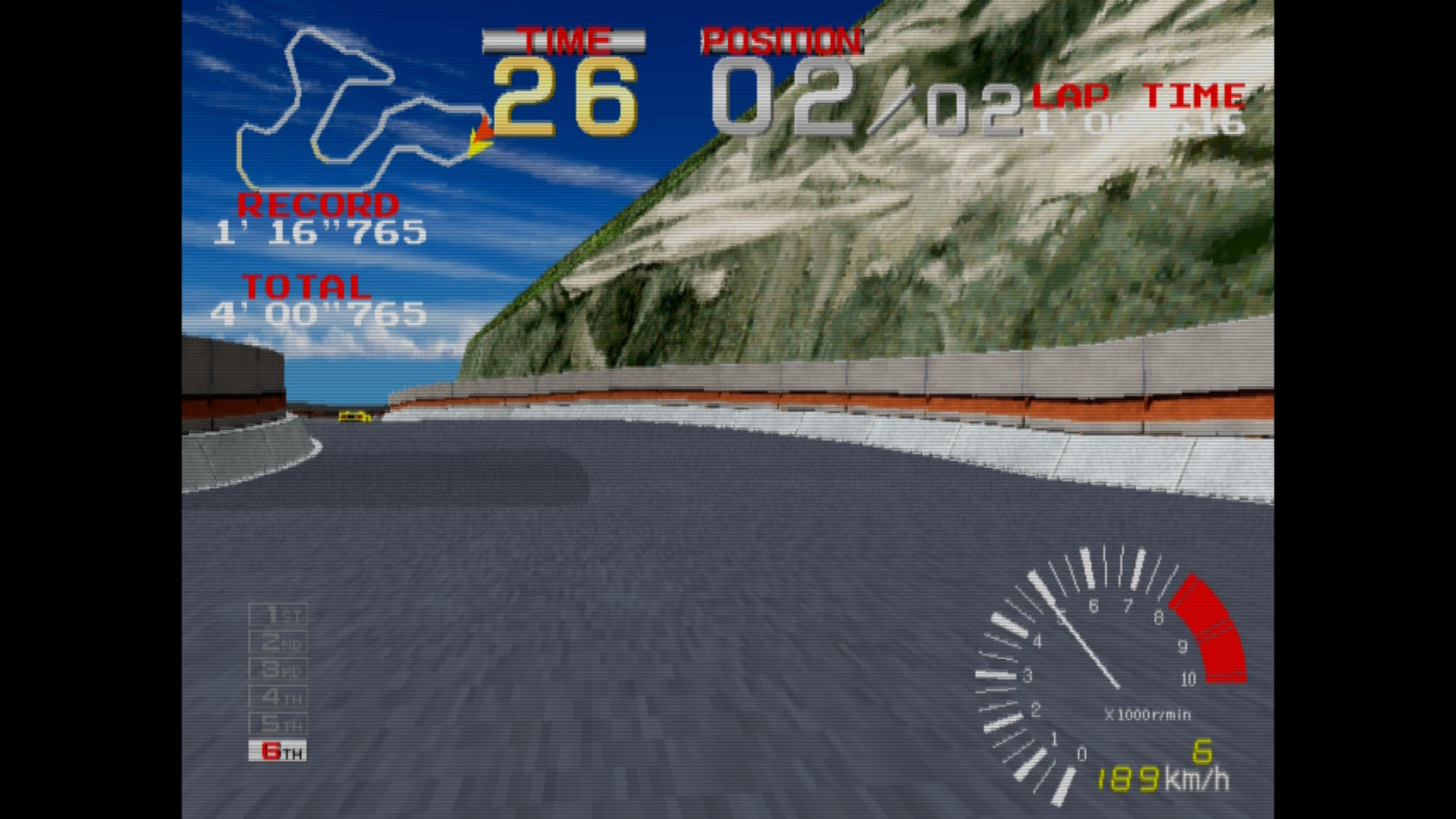
Next up is a big hairpin turn, the longest and sharpest on the course and the only spot in the whole game where you actually have to slow down significantly. The same principle applies here as to the other big turns, but it’s a much longer drift. You should hit the gas at around 190 km/h. You’re going to skid here, so don’t worry about it and do your best to steady the car for the coming series of curves.

Here’s what it’s like to run the Ridge Racer course for 20 hours

You enter a tight double S-curve here, easily the hardest part of the course and something that takes a lot of practice to come to terms with. You need to go through at full throttle, but positioning yourself incorrectly will slam you into a wall. When you come out of the first turn, it’s possible to position yourself so that the coming S-curve is basically just a straight line, like the one you slipped through earlier in the course. But you have to pull right after that to avoid hitting the wall.

It’s tough! I recommend using the Arcade Archives port’s save states to practice this part rather than playing full laps over and over again, like I did before I noticed the port had save states.

Here’s what it’s like to run the Ridge Racer course for 20 hours
The bump comes at the exact moment the texture on the road changes.

The next two turns are easy and to be taken at full throttle: it’s what follows them that is some trouble. In TT you’re going to hit a small sharp turn, then another speed bump, immediately before a big turn. You want to position yourself before you hit the bump, land with your wheels straight, and then take that long turn.

And that is it for the course: all that’s left to do is to take that long straightaway to the finish line, hugging the right wall as you do so. Now do it three times in a row, as the tension mounts with each repetition.

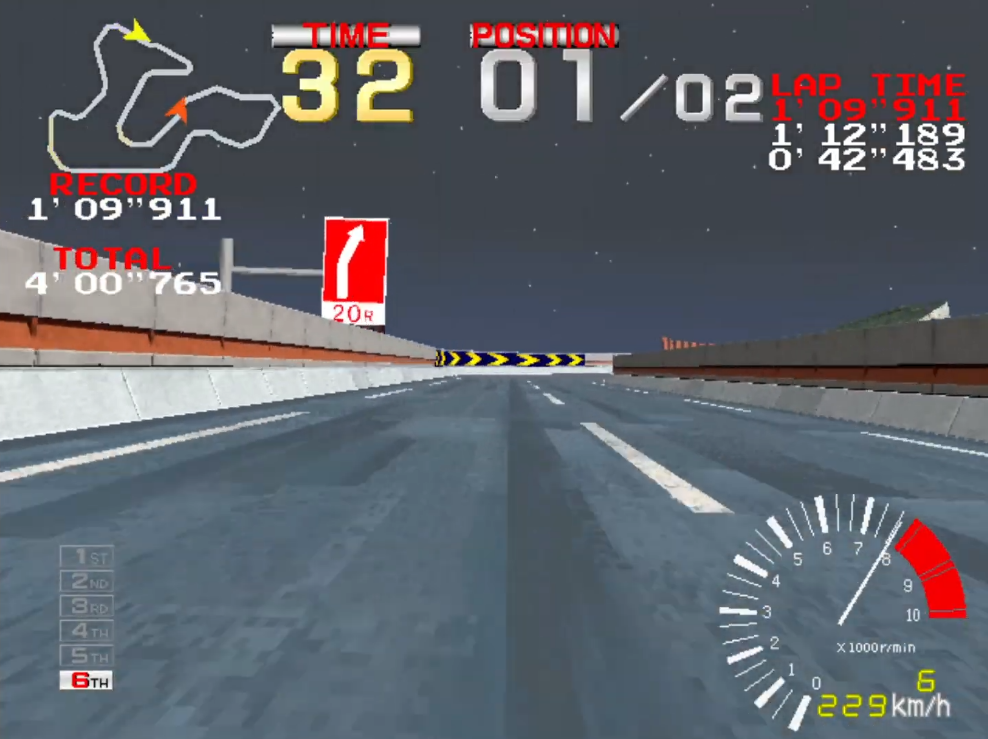
My best lap is about 1’09”, and I’m struggling to pull it off three times in a row in a single run. (This would put me in the top ten players: the best player has a completely insane time like 3'25".) If you’re not shooting for world records or anything, I think 1’12” or so is about the point at which you’ve mastered the course, and the rest is just shaving off time.

Here’s what it’s like to run the Ridge Racer course for 20 hours
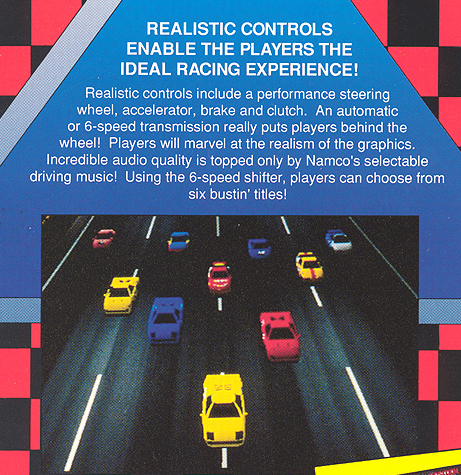
Bustin' as an adjective in 1993

This turned out a bit like when I wrote up Rondo of Blood, huh? Just like then, I didn't expect the final product to come out nearly this long. The hardest part was definitely screen-shotting from an arcade game that only has cockpit view on the Switch. As such, I dunno how great those shots of the turns came out, but they're about all I can do. Sorry!

Read the whole story
coffeentacos
5 days ago
reply
Vancouver
Share this story
Delete

Experience Changes the Game – Kingdom Hearts Final Mix

1 Share

It was my twelfth birthday. I used some money I got from some relatives to buy Kingdom Hearts for the Playstation 2, the “Platinum” release with its of-the-era silver and black box (the UK equivalent of America’s “Greatest Hits” releases). It had been out for a few years, and I had almost bought it on a few occasions before this, but there were also cheaper games that also looked fun. This time I did decide to pick it up, and honestly twelve is the perfect age to get into that game.

Squaresoft’s hybrid of action role-playing game and 3D platformer seemed so cool, as my only encounters with role-playing games before this were traditional turn-based ones. Seeing all these real-time action-packed fights blew my mind, I almost didn’t believe my friend when they called it a role-playing game. The unique menu-based interface did help bridge that mental gap.

I had never spent any time with Final Fantasy at this point outside of watching the odd flash animation parody on Newgrounds, but this was a time when I had firmly gotten into anime. Kingdom Hearts was full of characters that appealed to a kid who had at the time had just finished watching all of Dragon Ball. The aerial acrobatics of the combat also contributed to that appeal. The fact that it was a Disney crossover wasn’t given much thought. On occasion I still forget that it is a Disney game, with how much of a presence its original characters have.

I wasn’t very good at videogames back then, so I cheated using something called an “Xploder” to make myself completely invincible. I still found it challenging to navigate the world. Somehow I would keep getting lost, and anxieties about that still play in my head every time I revisit the game. Despite this invincibility I would also still lose to a few of the game’s harder bosses (likely down to the cheats I was using resulting in some sort of integer overflow glitch, causing me to enter combat with 1 health point). I still had a great time going through the game, getting attached to all the characters, feeling a bit sad at the ending being a bit of a downer, but I still wanted to give the game a “proper try”.

I started the game on its easiest difficulty, without any cheating, and found it to be very difficult. I hit a brick wall in the game’s penultimate area, stuck on a fight against the dragon from Sleeping Beauty. I put the game to rest, and a little over a year later my Xploder stopped working, on the day I received Kingdom Hearts II.

Fast-forward to a little over 20 years later it’s Christmas 2025. I’ve finished Kingdom Hearts without cheating 3 times at this point, each time on its “normal” difficulty level. It felt fairly easy on its original Playstation 2 version, but Kingdom Hearts Final Mix, the version that’s the basis for every modern re-release, is balanced to be a little more difficult. Each time I went to that version I would find the later battles a bit of a challenge. Feeling brave, I began my next run of Kingdom Heart Final Mix on its hardest difficulty. This was the easiest time I ever had with the game, but also the most fun.

Rather than just run through the main events of the game straight away, I decided I would try to do everything I could. In a game that I frequently revisited, I would finally be well and truly finished with it. Doing so let me engage with the game in ways I hadn’t really considered before. It turns out all of the things I had skipped over actually made the game more interesting.

The most time-consuming optional activity in Kingdom Hearts is its crafting system. It doesn’t have a huge amount of items, but in order to get all the materials for it a player needs to do a fair amount of grinding. I never thought of Kingdom Hearts as a particularly grindy game, but seeking these items out unveiled that the game could turn into one. This particular grind involves gimmicky fights that can’t be won simply by beating up the enemy, which is why I often skipped them before, you couldn’t just mash the attack button.  I have also played enough games where the grind in optional activities is what motivated me to focus on the main game, thankfully this wasn’t one of those.

It turns out those gimmicky fights made the game more exciting when engaged with properly. They’re weird little minigames that involve doing unusual things like playing a shell game, deflecting projectiles, or trying to do the biggest possible combos. I would’ve thought that having to repeat these things would make me sick of them, but the opposite happened, I appreciated them more. Challenging them again meant that I couldn’t just finish them by rushing through, I had to understand them in order to optimise my time spent grinding. Each of these fights had me using more of the game’s magic and abilities in ways that deepened my understanding of how they worked, and I carried through that into how I played the rest of the game.

It’s that knowledge that ended up making the later parts of the game significantly easier. Late game challenges became short fights, some only taking me around a minute to defeat them, including the dragon mentioned earlier. The reward for completing the crafting system was also the game’s most powerful weapon, and all that grinding boosted my character’s level enough that even the game’s optional superbosses weren’t too difficult. It felt good to finally finish parts of a game that had seemed impossible so long ago, alongside the comforts of childhood memories it all brings forth. The game had become significantly easier, but in a way that I had earned through effort and understanding. I didn’t beat those superbosses through brute force from my extra strength, I learned what abilities would be useful in offensive and defensive contexts and applied that.

Playing this as someone with a much more intense knowledge of Final Fantasy hasn’t affected how I feel about the game, it still holds up to me in the same way it did when I was twelve. It would be interesting to see if the same were to be true of its follow ups.


Read the whole story
coffeentacos
15 days ago
reply
Vancouver
Share this story
Delete

‘Ripley’ Turns Black And White To Color

1 Share

I didn’t watch Ripley at first. The black and white was a barrier (I know, but shut up, I was not alone). I have no trouble with black and white photography, so why black and white film? Perhaps because film feels more real to me, meaning it should be more real, meaning color. Either way, I hesitated to watch Ripley. At worst, I thought the black and white would be pretentious, at best ... well, I couldn’t think of that scenario. So I kept putting it off and putting it off as praise was heaped on this latest of a million adaptations of Patricia Highsmith’s thriller, The Talented Mr. Ripley. Then close friends started to recommend it, then I felt like a jerk (then I felt pretentious for avoiding it). So I put it on, and … wow.

By now most of us know this story. In 1950s New York, tenement-housed petty fraudster named Tom Ripley (a gecko-esque Andrew Scott) is hired by the wealthy father of a trust-fund kid, Dickie Greenleaf (a charmingly befuddled Johnny Flynn), to bring Dickie back from Italy, where he is frittering his life away painting terrible paintings while his girlfriend, Marge (Dakota Fanning in full Mona Lisa mode), writes a terrible book. Basically, instead of doing what he was paid to do, Tom falls for his target’s lifestyle, a lifestyle that has up until now been elusive to him. It’s this out-of-placeness that the black and white of this series, created by Steve Zaillian, fully exposes. Tom is often in Ripley’s monochromatic frames alone, disconnected from other human beings, often overwhelmed by his surroundings—dwarfed by buildings and their interiors, constricted by hallways and stairs—a man lost at sea, never comfortable, a guy who can get lost in a Caravaggio but can’t quite settle into the lushness of his new environs.


Read the whole story
coffeentacos
637 days ago
reply
Vancouver
Share this story
Delete

042: Super Crush KO

1 Share

CANON FIRE is made possible by the generous contributions of readers like you. Support more writing like this on Patreon. Thank you!

With a bubblegum pop aesthetic and low stakes story about rescuing your cat, Super Crush KO takes the essentials of stylish action games like Devil May Cry and Bayonetta and crushes them down to a 2D plane. There’s a familiar air combo focused rhythm; punches flow into launchers and directional specials, allowing you to close the distance and interrupt enemy attacks, with a rapid fire blaster for continuing juggles and keeping a combo alive as you approach.

Relaxed from the technical movement and execution requirements of its inspirations, Super Crush KO instead focuses on flowing through stages uninterrupted. Simply finishing a stage is a relaxed activity, but a mobile game style structure  pushes you to replay stages and aim for perfect combos, higher ranks and side objectives. 

The casual attitude makes it enjoyable to play when you want the same feeling character action games give you, without the intensity and sensory overload they often come with. So much of the genre’s fun comes from the absurd amount of tools you’re given for player expression that simplifying it might seem counter to the appeal, but Super Crush KO manages to keep that same satisfaction intact. 

With fewer tools each of them becomes more effective, allowing you to traverse space very quickly, with the speed increasing as the game introduces environmental obstacles that launch you at high speed vertically and horizontally. Dodging in Super Crush KO is almost platform fighter like, giving you invincibility and acting as a good way to reposition yourself, with only a short cooldown to limit you. Your normal combo is unremarkable, but a suite of directional specials gives you strong options to close the distance, interrupt incoming attacks, and launch enemies.

The aerial “Air Pop” in particular allows you to dash in all eight directions, homing in on enemies and chaining up to three in a row to extend the duration of an air combo near indefinitely. An energy meter limits the uses of special attacks, but defeating enemies fills it quickly, creating a loop where you can chain specials together to quickly defeat enemies, throw some regular combos and bullet juggles in for filler, and inflict enough damage to put you right back to full energy.

Super Crush KO lays on the feedback, with hitstop and screenshake for everything from big hits to dodging through bullets, and a ranking and score log tallying up every action so that even small actions feel satisfying. If I have any complaints it’s that the bosses don’t take advantage of the flexibility in the air combo system, making them more static than the regular stages, and that Air Pop’s short startup, multidirectional movement and homing properties kind of make it too useful, relegating other specials to more niche situations. 

As someone deep into the beat-em-up genre, Super Crush KO is an easy, casual game to come back to, with plenty of side objectives to attempt mastery. It’s got the same compelling loop that time trial platformers like Dustforce have, with less focus on the technical mastery of the inputs, but the ways you string together moves. The welcoming aesthetic, pop colors and cute character art all enhance that low stakes mood. If you’ve got any interest in the art of crafting an air combo, give this one a shot. 

Read the whole story
coffeentacos
673 days ago
reply
Vancouver
Share this story
Delete

041: What makes Zeroranger special, anyway?

1 Share

CANON FIRE is made possible by the generous contributions of readers like you. Support more writing like this on Patreon. Thank you!

Developed over a decade and layered in mysteries, Zeroranger is a shooter that’s received acclaim from both STG* fanatics and first-timers for the ways it bends genres. But for all its talk about the ways it pays homage to the genre, and the insistence that it’s something special, Zeroranger almost never gets talked about in plain terms, out of fear of spoiling the surprises that await first time players. That level of caution from its fans is almost admirable, but it leaves what makes the game special undiscussed, and makes it hard for both curious players wondering what the big deal is, and leaves Zeroranger’s best ideas unappreciated. 

With that in mind I’ll be doing a deep dive into Zeroranger’s design, with no limitations on what I talk about or spoil. 

On a basic level, Zeroranger is a vertically scrolling STG that borrows ideas from a variety of genre classics, paying homage to them through bosses, stage layouts and game mechanics. After each stage you’re given a choice between one of two weapons, each which will become useful in the next stage, but in different ways, with variations between the two playable ships. After the first stage you get a choice between back and side firing weapons, the second unlocks a lock on laser or chargeable shot, and the penultimate boss fight–against Grapefruit, the ship previously thought to be destroyed during the first attack on the enemy–unlocks a mech transformation with a powerful melee weapon that stacks damage and protects you from enemy attacks. 

Each weapon allows varied interactions with the level design, covering different areas of the screen and allowing you to approach enemy patterns in a new way. Since you can’t have both weapons of each tier, you’ll have to choose which weakness you’ll accept, and pair it with other weapons that can cover that weakness. It encourages repeat playthroughs to try different strategies and learn the stage layouts, which is good, because Zeroranger will demand repetition. 

At the core of Zeroranger is the theme of karmic cycles, repackaging long standing genre concepts in a way that ties them to the ongoing narrative. Like Neverawake, Zeroranger plays with the concepts of Loops–second playthroughs that remix the original stages–but here it acts closer to something out of the Nier series. The initial playthrough is only setup, with a repeat playthrough being the de facto second act, with altered context that builds on your original understanding, followed by a third and final act that brings a proper conclusion. 

The karmic themes even affect the meta progression of Zeroranger. Score contributes towards earning the next of nine total continues, used to retry a stage from a checkpoint after death. Continues are represented by the nine orbs that fill out a wheel at the end of the run, which itself resembles the Wheel of Samsara, often used by Buddhists to describe the cycle of existence that mortal beings are subject to. 

By framing each attempt as another cycle or reincarnation, it implies that each death has in fact happened, and the only way to escape the cycle is with enough perseverance and knowledge. It blows up the scale to a cosmic degree, and makes your journey to the end of the game, and the knowledge you build of its world, into a form of mechanical and narrative progression. 

This knowledge of the world becomes integral to the second loop, which introduces major changes to the patterns and layouts of the first loop, but allows you to return with all your weapons. With these previously unavailable weapons you can easily dispatch enemies that were hard to deal with, and details that seemed mysterious on the first loop fall into place. One of my favorite examples of this are the enemies who appear in the background, before flying into the foreground to attack. On the first loop they seem like a cool, decorative detail, but on the second loop, with the lock-on laser available, suddenly they’re targets you can pick off before they get a chance to attack.

The final act begins when you meet the Grapefruit for the second time and reveal your mech form, allowing you to have a proper duel where they’ll whip out several abilities, including more powerful versions of your own weapons, revealing why they were the first choice in dealing with the enemy. 

After defeating Grapefruit you’ll once again face the final boss, but this time instead of the boss rush of the first loop, they’ll give up and offer you another power up. 

Here Zeroranger shifts into its final act, requiring you to solve a series of puzzles before gaining access to the true ending. Grabbing the powerup shows you the “ending” and puts you into a loop where you’ll replay the first stage in Final Boss mode, leaning harder into Zeroranger’s CAVE** influences by changing out your default weapons for a Dodonpachi style barrage of bullets and bombs. Completing the stage and grabbing the powerup puts you into another brief minigame before glitching out and returning you to the title. 

To escape this you’ll need to reject that final powerup, either within the Final Boss stage or before, during the boss room where the boss rush takes place. By rejecting the offering you gain access to Despair, the real final boss hidden beneath the facility, who naturally has several phases to complete. The first phase is a puzzle itself, requiring you to carefully observe the orbs emitting the attacks, and time your own attacks to destroy them close to simultaneously, or otherwise be stuck helpless in yet another looping trap. 

Completing the first phase reveals the true form of the final boss, Despair, a suitably terrifying challenge with a massive suite of attacks whose design could inspire its own essay. Compared to the cerebral challenges preceding it, this final form is more straightforward, but learning the complexities of the patterns often felt as hard as the combined challenge of every obstacle met on the way here. 

Defeating Despair reveals the true final boss challenge–a sequence that reveals the origins of Zeroranger’s world, and connects several unresolved narrative threads. Not only must you complete it completely stripped of your previous arsenal, but you’re given a single chance to do so. 

Not quite understanding the gravity of what the game was implying there, I took on the final challenge after an exhausting struggle with Despair, desperate to finally see the ending–only to have my save deleted after I failed. 

Not only do you need to scale the mountainous challenge of defeating Despair, but you need to complete it with continues to spare, as each continue orb becomes a health point for your final confrontation. In addition, you have to quickly adapt to playing without any of the weapons you’ve built familiarity with during your playtime, and learn the new boss patterns on the fly while unraveling how exactly you can damage the boss. Practice runs are impractical, as you’ll have to complete the whole game at least once before returning, making the minimum time between attempts nearly an hour, if you’ve complete mastery of the rest of the game. 

So I cheated. I downloaded my save from the cloud, backed it up, then went back and completed it on my third try, after restoring my save twice. As I finished the final challenge, Zeroranger left me with the same message it began with:

May you attain enlightenment. 

By circumventing the challenge, by failing to persevere in the face of disaster, I’d arguably failed this goal. I’d given in to my material desires and skipped the suffering necessary to achieve the knowledge needed to break free of the cycle. Fitting then, that Zeroranger’s conclusion is one that’s hopeful, but open ended, implying that this current cycle has been broken, but the events that caused it may one day repeat themselves. 

Then Zeroranger deletes your save. 

Records carry over, and the color palette and story change to reflect your achievement, but progress unlocking stages is once again reset. You’re free of the meta trappings of the story, but are given one more reminder of how temporary progress is, and challenged one more time to complete a run to get the complete credits sequence. 

It’s a novel approach to player progression in a STG that not only reframes common genre ideas with a thematic approach, but slowly pushes players towards goals that the genre diehards naturally shoot for. By visually indicating the progress towards extra lives and continues through its score counter, it alerts players towards the importance of scoring for continued survival as well as the leaderboards, and encourages them to look for opportunities to maximize score. 

The harsh requirements to witness the ending almost guarantee that a player will be forced to start over, and unless they cheat (guilty), forces them to learn the stages and scoring systems to quickly earn back their progress. That process, and the need to hold onto as many continues as possible for the finale, pushes them closer to attempting the 1-credit clear, what most STG players consider the first major milestone in learning a game. Simply put, it’s a run where you complete all the stages in the game without using up a continue, and often denotes mastery. 

The parade of secrets and homages, alongside the narrative driven recontextualization of game mechanics and premise shifting final acts create  a novel approach for both genre veterans and newcomers, upending expectations with each new twist. Zeroranger’s revelations mark it as equal parts mystery and action game, and asks you to dig deeper, coming to an appreciation of its layered design in the process. 

Personally, as much as I respect the final act’s commitment to delivering on Zeroranger’s themes of struggle, persistence and reincarnation, the harsh penalty of deleting your save was demotivating to a degree that I didn’t feel was worth the tension it imparted. I can only imagine how a less experienced player might feel, struggling for hours to reach that point, and possibly being unsure if they could reach it again. Zeroranger’s patterns and stage design are often less demanding than most of its contemporaries, but they come with harsher penalties for failure. 

Even given that, it’s not hard to see why Zeroranger captured the imagination of so many. Designed intentionally to be approachable, with enough mystery to satisfy the lore hungry theorycrafters, Zeroranger provides many entry points. Paired with its striking two color palette and memorable soundtrack, it paints the picture of a greater world beyond its borders. The drawn out finale demands you engage Zeroranger with your entire attention, and its dramatic set pieces and score bring an emotional climax that the more traditional arcade style titles often can’t spend the runtime on. 

Even after the credits roll, Zeroranger leaves plenty to discover, both within its boundaries and outside. Its themes of karmic cycles and open-ended conclusion invite you to explore it further, and its homages and secrets point to other games and worlds whose influence helped bring it to life. It’s an introduction to the mindset of a genre fanatic, an homage for all those who’ve already journeyed through the genre to arrive here, and an invitation for those who haven’t to share in that same passion. 


Zeroranger is availble on PC. Homebrew ports are availble for the Switch and Linux based handhelds via Portmaste
r.


*STG: ShooTing Game, aka SHMUP or Shoot-Em-Up. A community term for the genre of arcade style shooters used to differentiate them from the more common first and third person shooters.

**CAVE: Developer of several major entries in the genre, and credited with popularizing the danmaku (bullet curtain) or bullet hell sub-genre. Their games are often marked by complex enemy bullet patterns, with a powerful player arsenal that can hit many parts of the screen at the same time.

Read the whole story
coffeentacos
698 days ago
reply
Vancouver
Share this story
Delete
Next Page of Stories